
Gas Boiler Installation Warrington: Why Does System Condition Affect Installation Costs?
Replacing a boiler can look straightforward from the outside. The old appliance comes out, a new one goes in, and the heating system is connected.

Why you can trust our content
We understand that the boiler industry can be confusing, with plenty of outdated or misleading information. That’s why we rely only on trusted, proven sources to guide our advice and installations:

At a glance
Why can the condition of an existing heating system affect boiler installation?
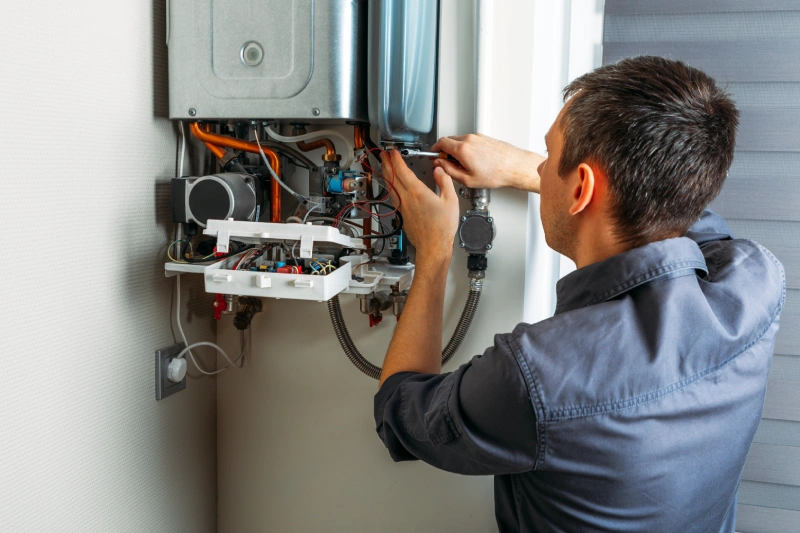
Replacing a boiler can look straightforward from the outside. The old appliance comes out, a new one goes in, and the heating system is connected. In reality, the condition of the wider heating system can influence how much preparation and additional work is needed.
For homeowners considering gas boiler installation Warrington, the existing boiler is only one part of the assessment. Pipework, radiators, valves, controls, the flue, condensate arrangements and the general condition of the heating circuit can all affect the work involved.
This is why two homes with seemingly identical boilers can receive very different installation quotations.
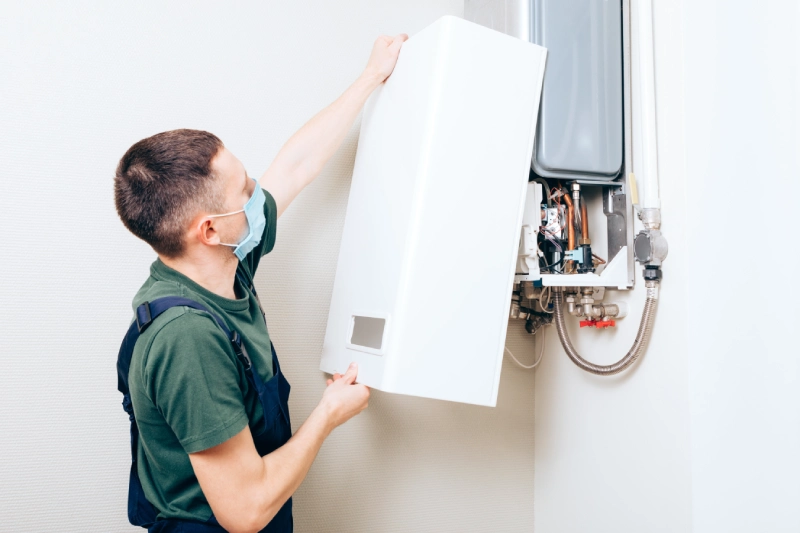
What does an installer check before replacing a gas boiler?
A professional assessment should consider the condition and layout of the complete heating system.
Depending on the property, this may include:
- Existing boiler condition
- Gas supply and pipework
- Heating flow and return pipework
- Radiators and valves
- Existing controls
- Expansion arrangements
- Condensate drainage
- Boiler flue
- Electrical connections
- System cleanliness
- Boiler location and access
- Existing system pressure and performance
The purpose is not to recommend unnecessary work. It is to establish whether the current system is suitable for the replacement and identify anything that could affect safety, reliability or performance.
This assessment also provides the information needed to prepare a more realistic quotation.
How can old pipework affect the installation?
Existing pipework may be perfectly serviceable, but an installer still needs to assess its condition and suitability.
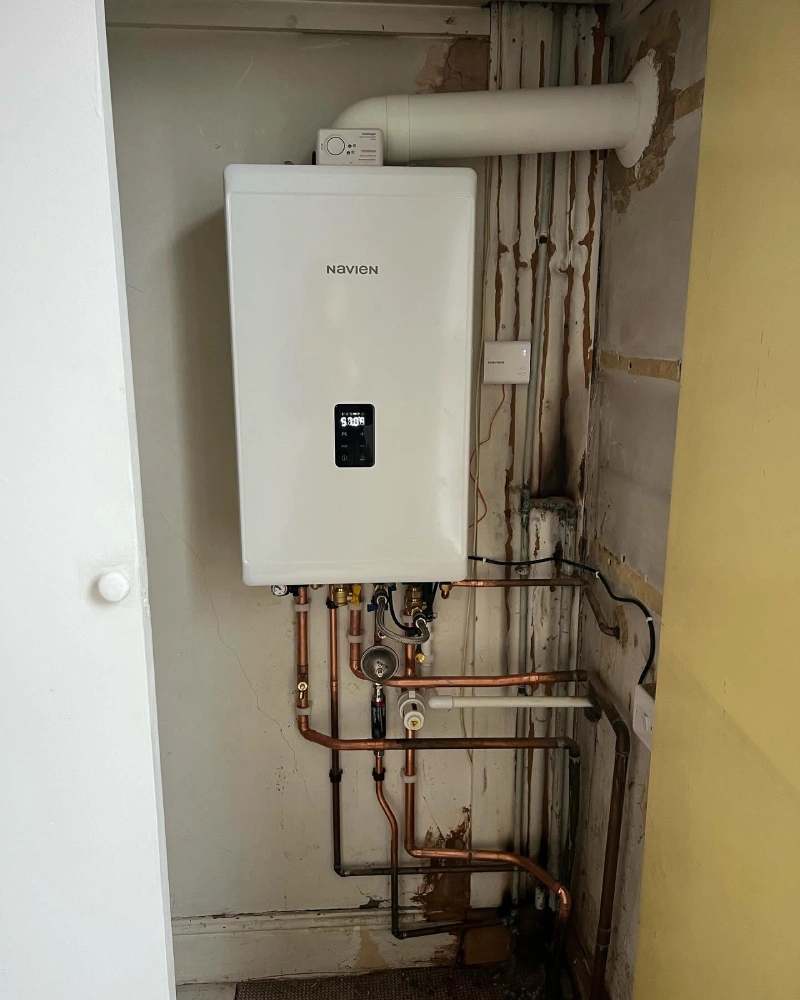
Older heating systems can contain pipework that has deteriorated, become restricted or been altered over the years. Previous extensions, renovations and boiler replacements can also leave a mixture of pipe sizes and routes.
If the replacement boiler is being installed in a different position, pipework may need to be extended or rerouted. Even when the boiler remains in the same location, connections may need to be modified to suit the new appliance.
This can affect boiler installation costs, particularly where additional labour or materials are required.
A clear quotation should explain any proposed pipework changes rather than simply adding an unexplained allowance.
Can system sludge and corrosion increase preparation work?
Yes. Sludge and corrosion can reduce the effectiveness of a central heating system and may cause problems for a new boiler if the system is not appropriately prepared.
Over time, corrosion products can circulate through heating pipework and radiators. This can contribute to cold spots, restricted circulation and reduced system performance.
If an installer identifies signs that the system needs cleaning, they may recommend flushing or another appropriate cleaning process before or during the replacement.
The exact approach depends on the condition of the system.
The important point for homeowners is that system preparation is not necessarily an unnecessary extra. In some properties, it can be an important part of installing a replacement boiler into an older heating circuit.
What happens if the radiators are in poor condition?
A new boiler cannot compensate for radiators that are badly corroded, damaged or unsuitable for the heating requirements of the rooms.
An assessment can identify obvious problems such as:
- Leaking radiator valves
- Significant corrosion
- Cold areas caused by circulation issues
- Damaged radiators
- Incorrectly sized radiators
- Poorly functioning thermostatic valves
Not every radiator needs to be replaced simply because the boiler is being upgraded.
However, if one or more radiators are already failing, it may make sense to address the issue as part of the wider heating work rather than waiting for a separate breakdown.
This is another reason why a detailed assessment can make a quotation more useful.
Could the existing controls affect the cost?
They can.
Older heating controls may provide limited control over when and how the heating operates. During a boiler replacement, the installer can assess whether the existing thermostat, programmer or other controls are compatible and appropriate.
Depending on the property and chosen boiler, homeowners may decide to upgrade the controls at the same time.
The additional cost will depend on what is being installed and how the existing system is configured.
It is sensible to ask for controls to be listed separately in the quotation so you know whether they are included in the main price or offered as an optional upgrade.
Why does the boiler flue need to be assessed?
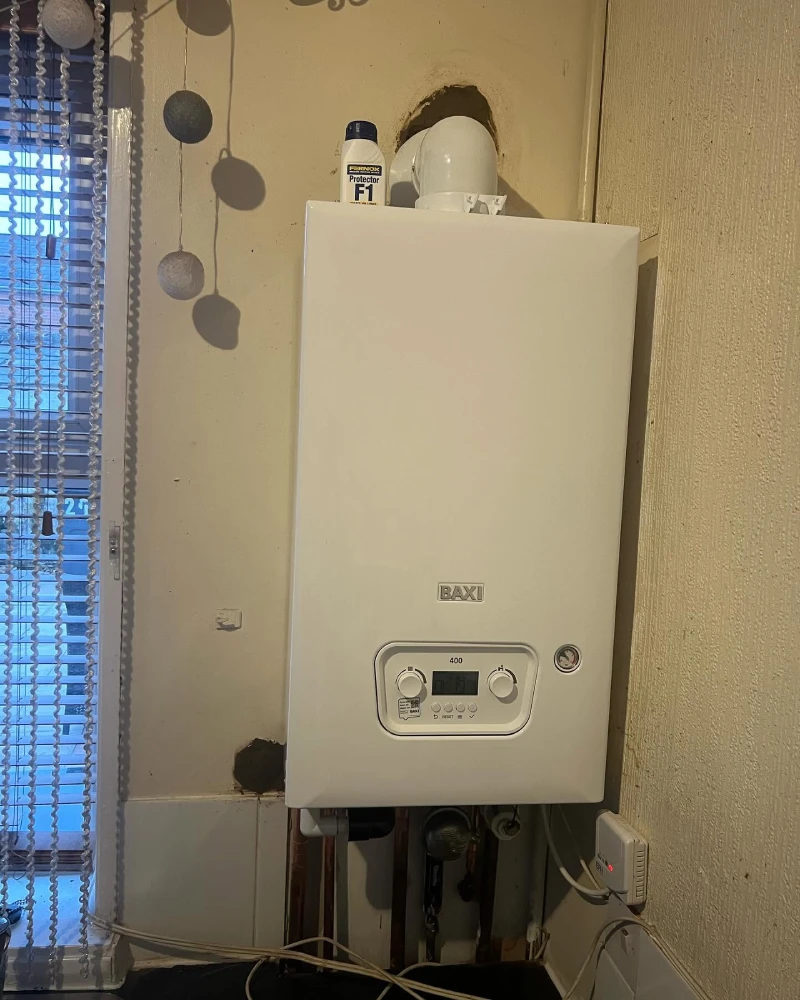
The flue safely carries combustion gases away from the boiler. Its route and termination therefore need careful consideration.
If the new boiler is installed in the same position, the existing flue route may still require assessment. If the boiler is moved, the flue arrangement may need to change entirely.
The installer should consider the proposed appliance, route, access and termination requirements before work begins.
A quotation that does not account for the actual flue arrangement may not provide a complete picture of the installation.
This is particularly relevant when comparing gas boiler installation warrington quotations where the properties or boiler locations differ.
Can the boiler position make installation more expensive?
Yes. Boiler location is one of the practical factors that can change the scope of work.
A straightforward replacement in an accessible location may require fewer alterations. Moving the boiler into another room or changing its position can introduce additional requirements.
These could include:
- Longer heating pipe runs
- Changes to gas pipework
- New condensate routes
- Altered flue arrangements
- Electrical alterations
- Additional access work
- Making good after the installation
The most convenient location for the homeowner is not always the simplest location for the installer.
What about condensate pipework?
Modern condensing boilers produce condensate that needs to be safely discharged.
The condensate route therefore needs to be considered as part of the installation. An existing arrangement may be suitable, but it should not simply be assumed that it can be reused without checking.
If the boiler is moved, the condensate route may also need to change.
This is a relatively small part of the overall system, but poor planning can create avoidable installation problems.
Let’s get started, Which fuel powers your boiler?
Mains Gas
LPG
Other
It just takes 60 Seconds
And then you can book a free consultation
Why can two boiler installation quotes be so different?
The boiler itself is only one component of the total cost.
Two installers may recommend similar appliances but include different levels of preparation, controls, pipework alterations or system cleaning.
For example:
|
Installation factor |
Potential effect on the quotation |
|
Same-position replacement |
Often involves fewer alterations |
|
Boiler relocation |
May require additional pipework and flue work |
|
System cleaning |
Adds preparation work where required |
|
New controls |
Increases equipment and installation scope |
|
Pipework alterations |
Can increase materials and labour |
|
Flue changes |
May require additional components and work |
|
Radiator replacement |
Adds equipment and installation time |
|
Difficult access |
Can increase labour requirements |
This is why boiler installation costs should be compared using the full scope rather than the headline boiler price.
A higher quotation is not automatically expensive, just as a low quotation is not automatically good value.
What should be included in a proper installation estimate?
A useful quotation should give the homeowner enough information to understand what is being proposed.
Look for details covering:
- Boiler make and model
- Boiler output
- Installation location
- Removal of the existing appliance
- Flue arrangements
- Pipework alterations
- System cleaning or preparation
- Controls
- Condensate arrangements
- Commissioning
- Waste removal
- Warranty information
- Any exclusions or assumptions
The more clearly these elements are described, the easier it becomes to compare different quotations.
If something important is unclear, ask before accepting the work.
Does an old heating system always need replacing with the boiler?
No.
A heating system does not automatically need a complete overhaul simply because the boiler is old.
If the radiators, pipework, valves and controls are in reasonable condition, much of the existing system may be retained.
The purpose of the assessment is to distinguish between components that can remain and those that genuinely require attention.
This can help prevent unnecessary spending while still allowing important issues to be addressed.
A typical Warrington replacement scenario
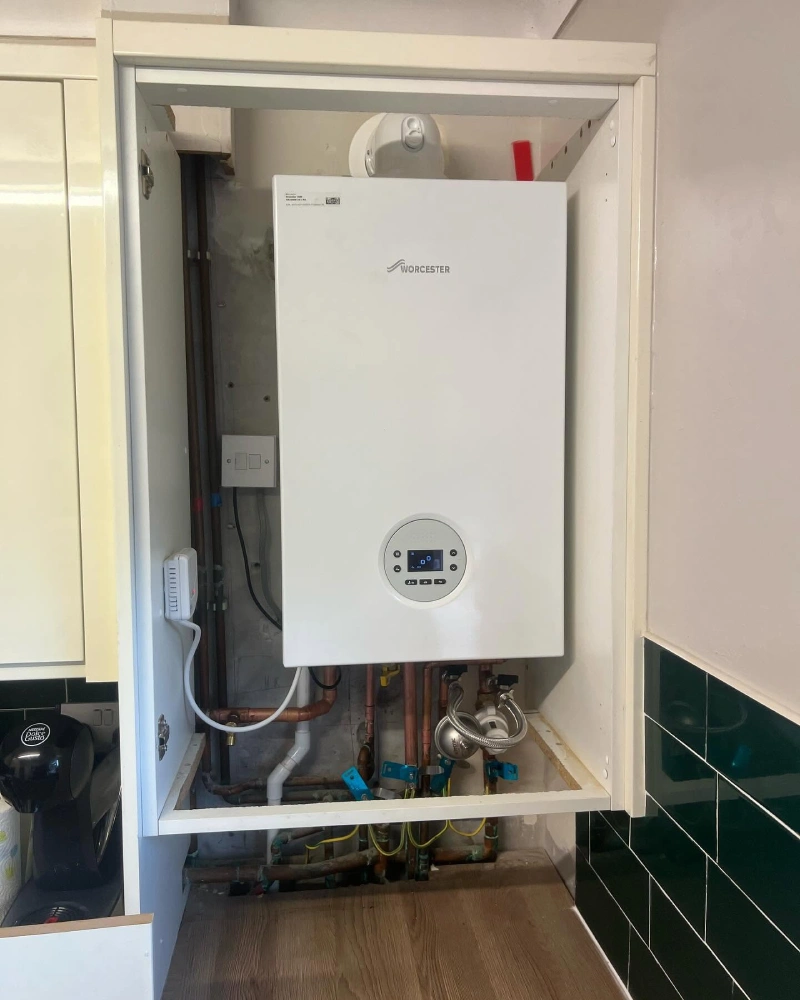
Imagine a homeowner with an older semi-detached property and a gas boiler that has become increasingly unreliable. The boiler is in the kitchen, and the homeowner wants a modern replacement in the same location.
During the assessment, the installer finds that the boiler itself is due for replacement, but most of the heating system remains serviceable. However, the heating circuit would benefit from cleaning, and one radiator valve is beginning to leak.
Rather than treating the whole system as needing replacement, the quotation separates the necessary preparation from optional improvements. The homeowner can then see exactly what the installation involves and make a more informed decision.
That is the value of assessing system condition before agreeing a price.
What questions should you ask about installation costs?
If you are comparing quotations, ask the installer to explain anything that is unclear.
Useful questions include:
- Is system cleaning included?
- Are existing radiators being retained?
- Are new controls included?
- Is the flue included?
- Will any pipework be replaced?
- Is the condensate arrangement included?
- Is the old boiler being removed?
- Are there any potential additional charges?
- Does the quotation include commissioning?
- What warranty is provided?
These questions can reveal whether apparently different prices are actually covering different amounts of work.
A transparent installer should be comfortable explaining the scope without relying on vague allowances.
Is it worth paying more for better installation planning?
A boiler is a long-term household purchase, so installation quality and planning deserve consideration alongside the appliance price.
A well-planned installation should account for the property’s existing system, explain any required preparation and provide a clear scope of work.
This can help reduce surprises during installation and give the homeowner greater confidence in the finished system.
The cheapest initial quote may not remain the cheapest if important preparation work has been excluded.
Final thoughts
The condition of the existing heating system can have just as much influence on a boiler replacement project as the appliance itself. Pipework, radiators, controls, flue arrangements, condensate drainage and system cleanliness all deserve attention before the work begins.
For homeowners considering gas boiler installation in Warrington, a proper assessment can provide a much clearer understanding of the installation scope and why the quoted price has been calculated.
Boilerable takes a practical approach to replacement planning, helping homeowners understand what is required rather than focusing only on the boiler itself. If you are considering an upgrade, contact our team for tailored guidance and a clear quotation.
Related articles


Let’s get started, Which fuel powers your boiler?
Mains Gas
LPG
Other
At a glance
Why can the condition of an existing heating system affect boiler installation?
Replacing a boiler can look straightforward from the outside. The old appliance comes out, a new one goes in, and the heating system is connected. In reality, the condition of the wider heating system can influence how much preparation and additional work is needed.
For homeowners considering gas boiler installation Warrington, the existing boiler is only one part of the assessment. Pipework, radiators, valves, controls, the flue, condensate arrangements and the general condition of the heating circuit can all affect the work involved.
This is why two homes with seemingly identical boilers can receive very different installation quotations.
What does an installer check before replacing a gas boiler?
A professional assessment should consider the condition and layout of the complete heating system.
Depending on the property, this may include:
- Existing boiler condition
- Gas supply and pipework
- Heating flow and return pipework
- Radiators and valves
- Existing controls
- Expansion arrangements
- Condensate drainage
- Boiler flue
- Electrical connections
- System cleanliness
- Boiler location and access
- Existing system pressure and performance
The purpose is not to recommend unnecessary work. It is to establish whether the current system is suitable for the replacement and identify anything that could affect safety, reliability or performance.
This assessment also provides the information needed to prepare a more realistic quotation.
How can old pipework affect the installation?
Existing pipework may be perfectly serviceable, but an installer still needs to assess its condition and suitability.
Older heating systems can contain pipework that has deteriorated, become restricted or been altered over the years. Previous extensions, renovations and boiler replacements can also leave a mixture of pipe sizes and routes.
If the replacement boiler is being installed in a different position, pipework may need to be extended or rerouted. Even when the boiler remains in the same location, connections may need to be modified to suit the new appliance.
This can affect boiler installation costs, particularly where additional labour or materials are required.
A clear quotation should explain any proposed pipework changes rather than simply adding an unexplained allowance.
Can system sludge and corrosion increase preparation work?
Yes. Sludge and corrosion can reduce the effectiveness of a central heating system and may cause problems for a new boiler if the system is not appropriately prepared.
Over time, corrosion products can circulate through heating pipework and radiators. This can contribute to cold spots, restricted circulation and reduced system performance.
If an installer identifies signs that the system needs cleaning, they may recommend flushing or another appropriate cleaning process before or during the replacement.
The exact approach depends on the condition of the system.
The important point for homeowners is that system preparation is not necessarily an unnecessary extra. In some properties, it can be an important part of installing a replacement boiler into an older heating circuit.
What happens if the radiators are in poor condition?
A new boiler cannot compensate for radiators that are badly corroded, damaged or unsuitable for the heating requirements of the rooms.
An assessment can identify obvious problems such as:
- Leaking radiator valves
- Significant corrosion
- Cold areas caused by circulation issues
- Damaged radiators
- Incorrectly sized radiators
- Poorly functioning thermostatic valves
Not every radiator needs to be replaced simply because the boiler is being upgraded.
However, if one or more radiators are already failing, it may make sense to address the issue as part of the wider heating work rather than waiting for a separate breakdown.
This is another reason why a detailed assessment can make a quotation more useful.
Could the existing controls affect the cost?
They can.
Older heating controls may provide limited control over when and how the heating operates. During a boiler replacement, the installer can assess whether the existing thermostat, programmer or other controls are compatible and appropriate.
Depending on the property and chosen boiler, homeowners may decide to upgrade the controls at the same time.
The additional cost will depend on what is being installed and how the existing system is configured.
It is sensible to ask for controls to be listed separately in the quotation so you know whether they are included in the main price or offered as an optional upgrade.
Why does the boiler flue need to be assessed?
The flue safely carries combustion gases away from the boiler. Its route and termination therefore need careful consideration.
If the new boiler is installed in the same position, the existing flue route may still require assessment. If the boiler is moved, the flue arrangement may need to change entirely.
The installer should consider the proposed appliance, route, access and termination requirements before work begins.
A quotation that does not account for the actual flue arrangement may not provide a complete picture of the installation.
This is particularly relevant when comparing gas boiler installation warrington quotations where the properties or boiler locations differ.
Can the boiler position make installation more expensive?
Yes. Boiler location is one of the practical factors that can change the scope of work.
A straightforward replacement in an accessible location may require fewer alterations. Moving the boiler into another room or changing its position can introduce additional requirements.
These could include:
- Longer heating pipe runs
- Changes to gas pipework
- New condensate routes
- Altered flue arrangements
- Electrical alterations
- Additional access work
- Making good after the installation
The most convenient location for the homeowner is not always the simplest location for the installer.
What about condensate pipework?
Modern condensing boilers produce condensate that needs to be safely discharged.
The condensate route therefore needs to be considered as part of the installation. An existing arrangement may be suitable, but it should not simply be assumed that it can be reused without checking.
If the boiler is moved, the condensate route may also need to change.
This is a relatively small part of the overall system, but poor planning can create avoidable installation problems.
Let’s get started, Which fuel powers your boiler?
Mains Gas
LPG
Other
It just takes 60 Seconds
And then you can book a free consultation
Why can two boiler installation quotes be so different?
The boiler itself is only one component of the total cost.
Two installers may recommend similar appliances but include different levels of preparation, controls, pipework alterations or system cleaning.
For example:
|
Installation factor |
Potential effect on the quotation |
|
Same-position replacement |
Often involves fewer alterations |
|
Boiler relocation |
May require additional pipework and flue work |
|
System cleaning |
Adds preparation work where required |
|
New controls |
Increases equipment and installation scope |
|
Pipework alterations |
Can increase materials and labour |
|
Flue changes |
May require additional components and work |
|
Radiator replacement |
Adds equipment and installation time |
|
Difficult access |
Can increase labour requirements |
This is why boiler installation costs should be compared using the full scope rather than the headline boiler price.
A higher quotation is not automatically expensive, just as a low quotation is not automatically good value.
What should be included in a proper installation estimate?
A useful quotation should give the homeowner enough information to understand what is being proposed.
Look for details covering:
- Boiler make and model
- Boiler output
- Installation location
- Removal of the existing appliance
- Flue arrangements
- Pipework alterations
- System cleaning or preparation
- Controls
- Condensate arrangements
- Commissioning
- Waste removal
- Warranty information
- Any exclusions or assumptions
The more clearly these elements are described, the easier it becomes to compare different quotations.
If something important is unclear, ask before accepting the work.
Does an old heating system always need replacing with the boiler?
No.
A heating system does not automatically need a complete overhaul simply because the boiler is old.
If the radiators, pipework, valves and controls are in reasonable condition, much of the existing system may be retained.
The purpose of the assessment is to distinguish between components that can remain and those that genuinely require attention.
This can help prevent unnecessary spending while still allowing important issues to be addressed.
A typical Warrington replacement scenario
Imagine a homeowner with an older semi-detached property and a gas boiler that has become increasingly unreliable. The boiler is in the kitchen, and the homeowner wants a modern replacement in the same location.
During the assessment, the installer finds that the boiler itself is due for replacement, but most of the heating system remains serviceable. However, the heating circuit would benefit from cleaning, and one radiator valve is beginning to leak.
Rather than treating the whole system as needing replacement, the quotation separates the necessary preparation from optional improvements. The homeowner can then see exactly what the installation involves and make a more informed decision.
That is the value of assessing system condition before agreeing a price.
What questions should you ask about installation costs?
If you are comparing quotations, ask the installer to explain anything that is unclear.
Useful questions include:
- Is system cleaning included?
- Are existing radiators being retained?
- Are new controls included?
- Is the flue included?
- Will any pipework be replaced?
- Is the condensate arrangement included?
- Is the old boiler being removed?
- Are there any potential additional charges?
- Does the quotation include commissioning?
- What warranty is provided?
These questions can reveal whether apparently different prices are actually covering different amounts of work.
A transparent installer should be comfortable explaining the scope without relying on vague allowances.
Is it worth paying more for better installation planning?
A boiler is a long-term household purchase, so installation quality and planning deserve consideration alongside the appliance price.
A well-planned installation should account for the property’s existing system, explain any required preparation and provide a clear scope of work.
This can help reduce surprises during installation and give the homeowner greater confidence in the finished system.
The cheapest initial quote may not remain the cheapest if important preparation work has been excluded.
Final thoughts
The condition of the existing heating system can have just as much influence on a boiler replacement project as the appliance itself. Pipework, radiators, controls, flue arrangements, condensate drainage and system cleanliness all deserve attention before the work begins.
For homeowners considering gas boiler installation in Warrington, a proper assessment can provide a much clearer understanding of the installation scope and why the quoted price has been calculated.
Boilerable takes a practical approach to replacement planning, helping homeowners understand what is required rather than focusing only on the boiler itself. If you are considering an upgrade, contact our team for tailored guidance and a clear quotation.


