
Why Should Boiler Installation in Warrington Start With a Proper Home Assessment?
A new boiler is not simply a matter of choosing a model from a brochure and arranging an installation date.

Why you can trust our content
We understand that the boiler industry can be confusing, with plenty of outdated or misleading information. That’s why we rely only on trusted, proven sources to guide our advice and installations:


At a glance
The right system depends on the property, existing heating system, hot water requirements, pipework, flue position and available installation space.
That is why a proper assessment should come before a firm recommendation. A suitable boiler can perform efficiently for many years, but the installation needs to be planned around the home rather than treating every property as the same.
For homeowners arranging boiler installation in Warrington, an assessment can also make the quotation clearer. It gives the installer an opportunity to identify work that may be required before the installation begins, reducing the risk of unexpected additions later.
What does a proper boiler assessment look at?
A home assessment should consider much more than the existing boiler. The installer needs to understand how the whole heating and hot water system works and whether the proposed replacement is suitable for the property.
Important areas usually include:
- The size and layout of the property
- Number of bedrooms and bathrooms
- Existing heating demand
- Hot water usage and peak demand
- Existing radiators and heating circuits
- Gas pipework and supply
- Cold water supply
- Condensate arrangements
- Flue position and termination
- Boiler location and access
- Existing controls and thermostats
- Electrical requirements
- Potential changes to pipework
- Removal and disposal of the old boiler
These checks help an installer establish the practical scope of the work.
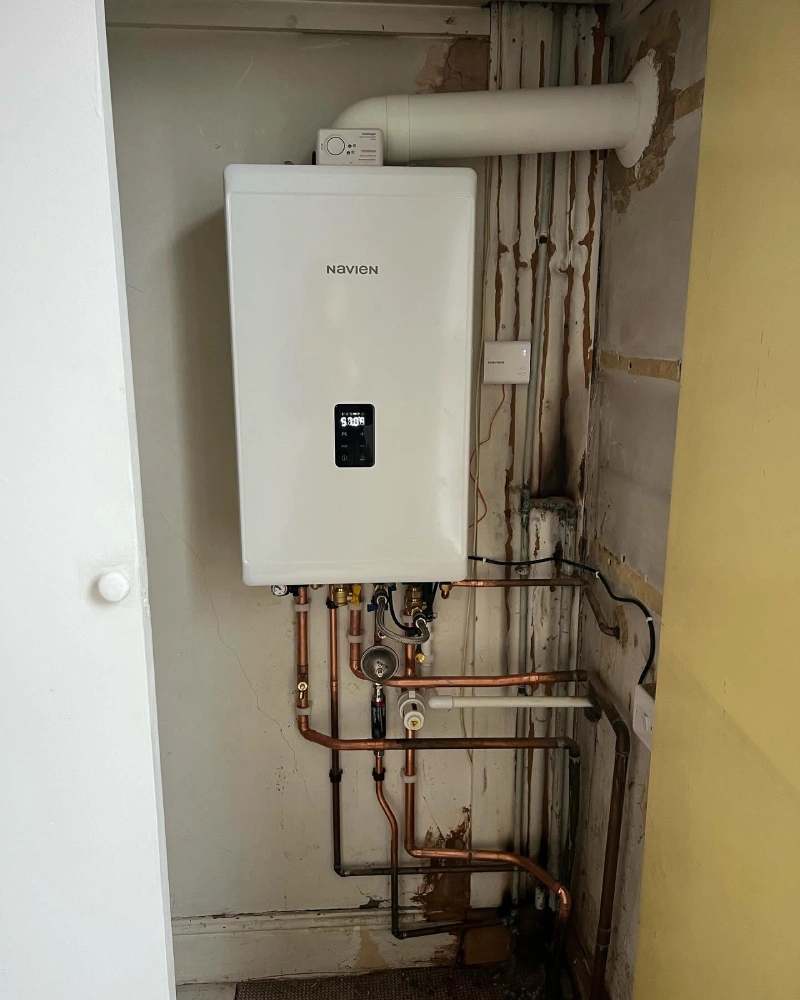
For example, a boiler may fit neatly into an existing cupboard, but the surrounding pipework could need modification. In another property, the existing flue route may not be suitable for the proposed boiler position.
A good assessment therefore looks beyond whether the new appliance will physically fit.
How does property size affect the boiler recommendation?
Boiler size should be based on the heating and hot water requirements of the property rather than simply choosing the largest available appliance.
A boiler that is significantly oversized may not operate as efficiently as it could, particularly when the property’s heating demand is relatively low. On the other hand, an undersized boiler may struggle to provide the required heating or hot water performance.
A basic assessment considers factors such as:
|
Property factor |
Why it matters |
|
Property size |
Helps establish likely heating demand |
|
Number of bedrooms |
Provides useful context for overall usage |
|
Bathrooms |
Can influence hot water requirements |
|
Insulation |
Affects heat loss and heating demand |
|
Radiators |
Indicates the existing heat distribution |
|
Hot water usage |
Helps determine the most suitable system |
|
Boiler location |
Affects installation access and flue arrangements |
|
Existing pipework |
Can influence installation requirements |
This does not mean that property size alone determines boiler selection. Two houses with the same number of bedrooms can have very different heating requirements because of construction, insulation, windows, extensions and household usage.
That is why a proper assessment is more useful than relying on a simple bedroom-based recommendation.
Could the existing heating system change the installation plan?
Yes. The condition and design of the existing heating system can have a significant influence on the work involved.
If an older boiler is being replaced, the installer should consider the condition of the heating circuit, radiators, valves and accessible pipework. Older systems may also contain accumulated sludge or corrosion that could affect the performance of a replacement boiler.
This does not automatically mean that every component needs replacing. Instead, the installer should identify any issues that could reasonably affect the new system and explain what action, if any, is recommended.
The assessment may therefore lead to additional work such as:
- Cleaning or flushing the heating system
- Replacing unsuitable valves
- Modifying sections of pipework
- Improving system controls
- Replacing damaged or inaccessible components
- Adjusting the condensate route
- Updating the boiler flue arrangement
A transparent recommendation should explain why each item is necessary rather than simply adding work to the quotation.
Why should gas supply and pipework be checked?
The boiler itself is only one part of the installation. It needs an appropriate gas supply and correctly configured connections to operate safely and reliably.
During an assessment, the installer can look at the existing gas pipework and consider whether it is suitable for the proposed appliance and installation arrangement.
The same principle applies to heating and water pipework. If the new boiler is being installed in a different position, pipe routes may need to change. A straightforward replacement in the same location can have a very different installation scope from moving the boiler to another room or floor.
These details are important when comparing quotations because two prices may appear similar while covering different amounts of work.
A boiler fitter Warrington homeowners can rely on should therefore be able to explain what is included in the proposed installation and what assumptions have been made.
What should be checked around the boiler flue?
The flue is an essential part of a gas boiler installation because it safely removes combustion gases from the appliance.
Its position, route and termination need to be considered when planning the replacement. If a boiler is being moved, the flue arrangement may also change.
The assessment should establish whether the proposed flue route is appropriate and whether access or additional work is required. This is particularly important where the existing boiler is older or where previous building alterations have changed the surrounding layout.
Rather than assuming that an old flue arrangement can simply be reused, the installation should be planned around the requirements of the replacement appliance and current applicable standards.
Does the boiler location affect the quotation?
The location can make a considerable difference.
Installing a boiler in the same position may require less alteration than relocating it. However, keeping the boiler where it is may not always be the best option if access is poor, the appliance is difficult to maintain, or the existing arrangement creates unnecessary pipework complications.
An assessment can compare practical options before installation work starts.
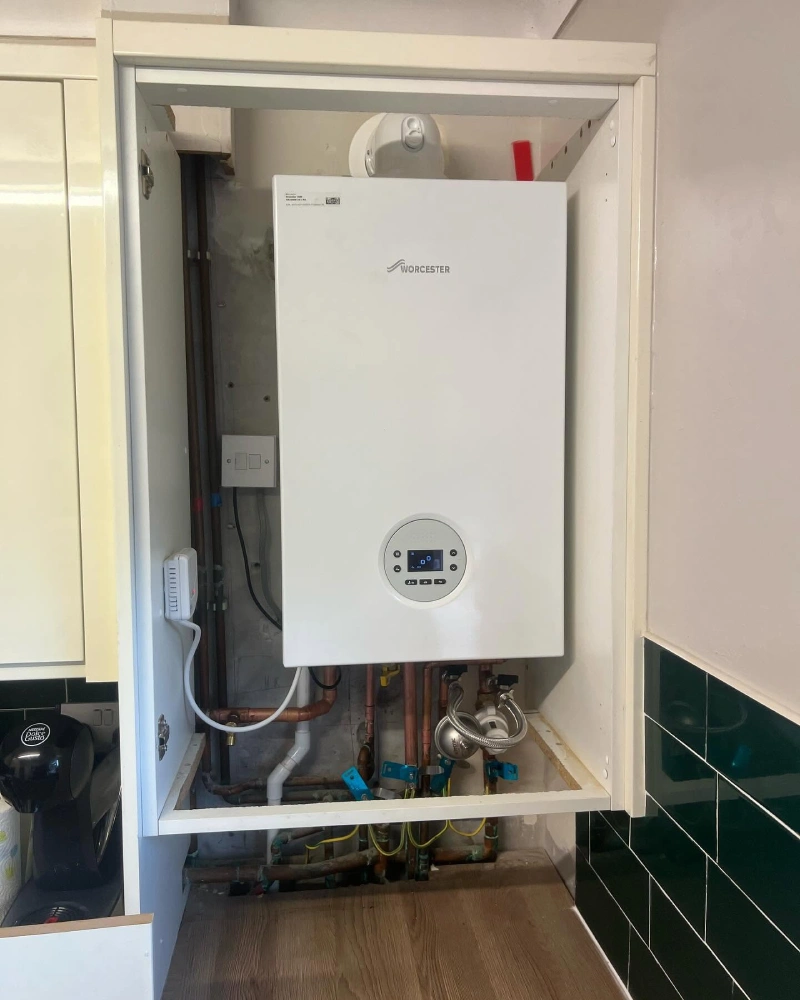
For example, a homeowner may want a boiler moved into a kitchen cupboard to free up space elsewhere. That could involve additional pipework, electrical work, condensate routing and flue considerations. Identifying those requirements in advance makes the final scope much easier to understand.
How can an assessment make a boiler quote more accurate?
A quotation is only as reliable as the information used to prepare it.
A remote price may provide a useful starting point, but an installer who has assessed the property can identify practical details that are difficult to establish from photographs or a short conversation.
A proper quote should make clear:
- Which boiler model is being proposed
- The expected installation location
- Whether the old boiler will be removed
- What happens to existing pipework
- Whether system cleaning is included
- What controls are included
- How the flue will be installed
- Whether condensate work is included
- Whether commissioning is included
- What warranty applies
- Any assumptions or exclusions
This level of detail helps homeowners compare quotations on a like-for-like basis.
A lower headline price is not necessarily better value if essential installation work has been excluded and appears later as an additional charge.
What happens if an assessment reveals a problem?
Finding an issue before installation is generally preferable to discovering it once work has already started.
For example, an assessment could identify restricted access, unsuitable pipework or a difficult flue route. The installer can then explain the problem, discuss the available options and account for the work in the quotation.
This gives the homeowner an opportunity to make an informed decision before the installation begins.
In some cases, the recommendation may even change. A particular boiler arrangement could prove impractical because of the property’s layout, while another option may provide a cleaner and more straightforward solution.
The purpose of an assessment is therefore not simply to sell a particular boiler. It is to establish what will work properly in the home.
Let’s get started, Which fuel powers your boiler?
Mains Gas
LPG
Other
It just takes 60 Seconds
And then you can book a free consultation
A typical Warrington installation scenario
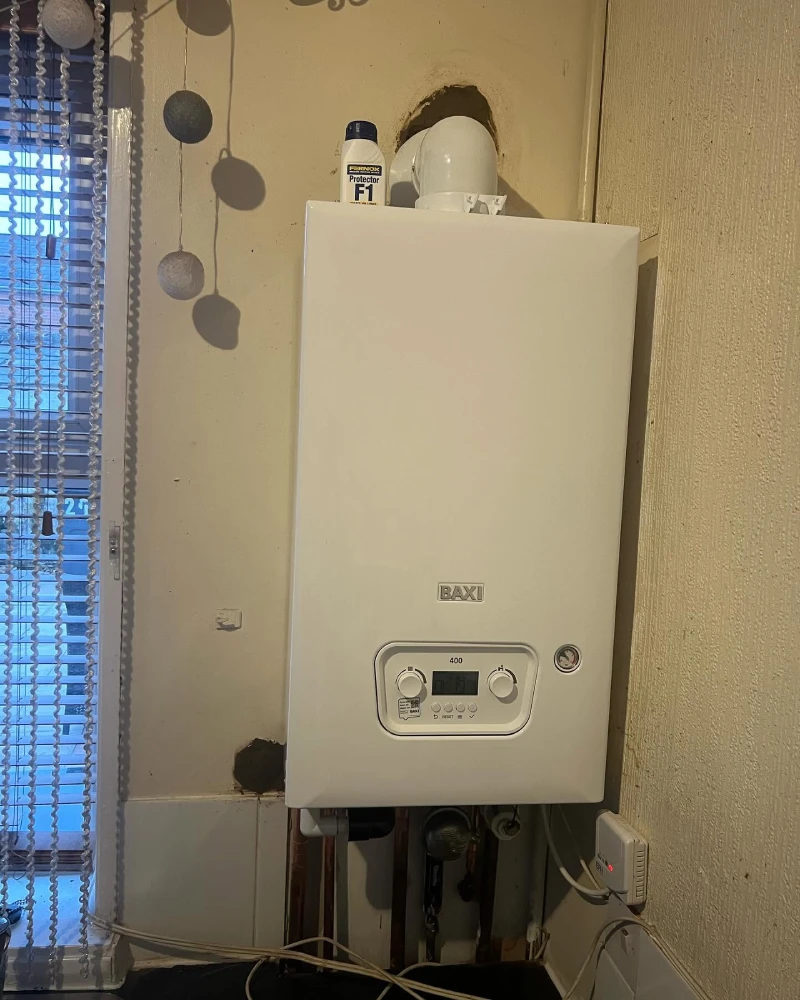
Consider a typical semi-detached property with an older gas boiler located in a kitchen cupboard. The homeowner wants a replacement because the existing appliance is becoming unreliable and heating performance has declined.
At first glance, this could look like a straightforward boiler swap. However, an assessment may reveal that sections of the pipework need updating, the heating system would benefit from cleaning, and the existing controls are dated.
The installer can account for those requirements before work starts. Instead of receiving a basic boiler price followed by several possible extras, the homeowner has a clearer picture of the proposed installation and its overall scope.
That is one of the main advantages of professional planning.
What questions should homeowners ask before agreeing to installation?
A few practical questions can reveal whether the quotation has been properly prepared.
Ask the installer:
- Has the property been assessed before the quotation was finalised?
- What boiler model and output are being recommended?
- Why is that boiler suitable for the property?
- Is the existing heating system being checked?
- Is system cleaning included?
- Are controls included in the price?
- Is the flue installation included?
- Will the old boiler be removed and disposed of?
- Are there any exclusions or potential additional costs?
- Who will carry out the installation and commissioning?
A reputable boiler fitter Warrington homeowners choose should be comfortable answering these questions clearly.
You do not need to be a heating expert to compare quotations effectively. The important thing is knowing what you are actually paying for.
Is the cheapest boiler installation quote always the best option?
Not necessarily. Price matters, but it needs to be considered alongside the scope of work, boiler specification, installation standards, controls, warranty and expected system performance.
A quotation that includes everything needed for the job may initially appear more expensive than a basic price that excludes certain elements.
When comparing boiler installation Warrington quotes, consider the complete package rather than focusing only on the figure at the bottom of the page.
A useful comparison should look at both the appliance and the installation.
If one quotation includes system preparation, upgraded controls and all necessary pipework while another does not, they are not genuinely like-for-like prices.
Why is proper planning important for long-term boiler performance?
Good installation planning can help avoid problems that stem from unsuitable positioning, inadequate system preparation or poorly considered pipework.
The boiler needs to be correctly installed, commissioned and integrated with the rest of the heating system. The assessment stage provides the opportunity to identify practical issues before they become installation problems.
It also gives homeowners a better understanding of what is changing in their property and why.
That clarity is valuable because a boiler replacement is a significant household expense. The aim should be to choose an appropriate system and have the work completed properly, rather than simply selecting the lowest initial price.
Final thoughts
A successful boiler replacement starts well before the old appliance is removed. Understanding the property, heating system, pipework, boiler location and installation requirements allows the work to be planned properly and the quotation to be more transparent.
For homeowners considering boiler installation in Warrington, a detailed assessment is one of the simplest ways to reduce uncertainty. It helps ensure that the recommended boiler is appropriate and that important installation requirements are identified before work begins.
Boilerable can provide practical guidance based on the property and the requirements of the household. If you are planning a replacement, speak to our team for tailored advice and a clear understanding of what your installation involves.
Related articles


Let’s get started, Which fuel powers your boiler?
Mains Gas
LPG
Other
At a glance
The right system depends on the property, existing heating system, hot water requirements, pipework, flue position and available installation space.
That is why a proper assessment should come before a firm recommendation. A suitable boiler can perform efficiently for many years, but the installation needs to be planned around the home rather than treating every property as the same.
For homeowners arranging boiler installation in Warrington, an assessment can also make the quotation clearer. It gives the installer an opportunity to identify work that may be required before the installation begins, reducing the risk of unexpected additions later.
What does a proper boiler assessment look at?
A home assessment should consider much more than the existing boiler. The installer needs to understand how the whole heating and hot water system works and whether the proposed replacement is suitable for the property.
Important areas usually include:
- The size and layout of the property
- Number of bedrooms and bathrooms
- Existing heating demand
- Hot water usage and peak demand
- Existing radiators and heating circuits
- Gas pipework and supply
- Cold water supply
- Condensate arrangements
- Flue position and termination
- Boiler location and access
- Existing controls and thermostats
- Electrical requirements
- Potential changes to pipework
- Removal and disposal of the old boiler
These checks help an installer establish the practical scope of the work.
For example, a boiler may fit neatly into an existing cupboard, but the surrounding pipework could need modification. In another property, the existing flue route may not be suitable for the proposed boiler position.
A good assessment therefore looks beyond whether the new appliance will physically fit.
How does property size affect the boiler recommendation?
Boiler size should be based on the heating and hot water requirements of the property rather than simply choosing the largest available appliance.
A boiler that is significantly oversized may not operate as efficiently as it could, particularly when the property’s heating demand is relatively low. On the other hand, an undersized boiler may struggle to provide the required heating or hot water performance.
A basic assessment considers factors such as:
|
Property factor |
Why it matters |
|
Property size |
Helps establish likely heating demand |
|
Number of bedrooms |
Provides useful context for overall usage |
|
Bathrooms |
Can influence hot water requirements |
|
Insulation |
Affects heat loss and heating demand |
|
Radiators |
Indicates the existing heat distribution |
|
Hot water usage |
Helps determine the most suitable system |
|
Boiler location |
Affects installation access and flue arrangements |
|
Existing pipework |
Can influence installation requirements |
This does not mean that property size alone determines boiler selection. Two houses with the same number of bedrooms can have very different heating requirements because of construction, insulation, windows, extensions and household usage.
That is why a proper assessment is more useful than relying on a simple bedroom-based recommendation.
Could the existing heating system change the installation plan?
Yes. The condition and design of the existing heating system can have a significant influence on the work involved.
If an older boiler is being replaced, the installer should consider the condition of the heating circuit, radiators, valves and accessible pipework. Older systems may also contain accumulated sludge or corrosion that could affect the performance of a replacement boiler.
This does not automatically mean that every component needs replacing. Instead, the installer should identify any issues that could reasonably affect the new system and explain what action, if any, is recommended.
The assessment may therefore lead to additional work such as:
- Cleaning or flushing the heating system
- Replacing unsuitable valves
- Modifying sections of pipework
- Improving system controls
- Replacing damaged or inaccessible components
- Adjusting the condensate route
- Updating the boiler flue arrangement
A transparent recommendation should explain why each item is necessary rather than simply adding work to the quotation.
Why should gas supply and pipework be checked?
The boiler itself is only one part of the installation. It needs an appropriate gas supply and correctly configured connections to operate safely and reliably.
During an assessment, the installer can look at the existing gas pipework and consider whether it is suitable for the proposed appliance and installation arrangement.
The same principle applies to heating and water pipework. If the new boiler is being installed in a different position, pipe routes may need to change. A straightforward replacement in the same location can have a very different installation scope from moving the boiler to another room or floor.
These details are important when comparing quotations because two prices may appear similar while covering different amounts of work.
A boiler fitter Warrington homeowners can rely on should therefore be able to explain what is included in the proposed installation and what assumptions have been made.
What should be checked around the boiler flue?
The flue is an essential part of a gas boiler installation because it safely removes combustion gases from the appliance.
Its position, route and termination need to be considered when planning the replacement. If a boiler is being moved, the flue arrangement may also change.
The assessment should establish whether the proposed flue route is appropriate and whether access or additional work is required. This is particularly important where the existing boiler is older or where previous building alterations have changed the surrounding layout.
Rather than assuming that an old flue arrangement can simply be reused, the installation should be planned around the requirements of the replacement appliance and current applicable standards.
Does the boiler location affect the quotation?
The location can make a considerable difference.
Installing a boiler in the same position may require less alteration than relocating it. However, keeping the boiler where it is may not always be the best option if access is poor, the appliance is difficult to maintain, or the existing arrangement creates unnecessary pipework complications.
An assessment can compare practical options before installation work starts.
For example, a homeowner may want a boiler moved into a kitchen cupboard to free up space elsewhere. That could involve additional pipework, electrical work, condensate routing and flue considerations. Identifying those requirements in advance makes the final scope much easier to understand.
How can an assessment make a boiler quote more accurate?
A quotation is only as reliable as the information used to prepare it.
A remote price may provide a useful starting point, but an installer who has assessed the property can identify practical details that are difficult to establish from photographs or a short conversation.
A proper quote should make clear:
- Which boiler model is being proposed
- The expected installation location
- Whether the old boiler will be removed
- What happens to existing pipework
- Whether system cleaning is included
- What controls are included
- How the flue will be installed
- Whether condensate work is included
- Whether commissioning is included
- What warranty applies
- Any assumptions or exclusions
This level of detail helps homeowners compare quotations on a like-for-like basis.
A lower headline price is not necessarily better value if essential installation work has been excluded and appears later as an additional charge.
What happens if an assessment reveals a problem?
Finding an issue before installation is generally preferable to discovering it once work has already started.
For example, an assessment could identify restricted access, unsuitable pipework or a difficult flue route. The installer can then explain the problem, discuss the available options and account for the work in the quotation.
This gives the homeowner an opportunity to make an informed decision before the installation begins.
In some cases, the recommendation may even change. A particular boiler arrangement could prove impractical because of the property’s layout, while another option may provide a cleaner and more straightforward solution.
The purpose of an assessment is therefore not simply to sell a particular boiler. It is to establish what will work properly in the home.
Let’s get started, Which fuel powers your boiler?
Mains Gas
LPG
Other
It just takes 60 Seconds
And then you can book a free consultation
A typical Warrington installation scenario
Consider a typical semi-detached property with an older gas boiler located in a kitchen cupboard. The homeowner wants a replacement because the existing appliance is becoming unreliable and heating performance has declined.
At first glance, this could look like a straightforward boiler swap. However, an assessment may reveal that sections of the pipework need updating, the heating system would benefit from cleaning, and the existing controls are dated.
The installer can account for those requirements before work starts. Instead of receiving a basic boiler price followed by several possible extras, the homeowner has a clearer picture of the proposed installation and its overall scope.
That is one of the main advantages of professional planning.
What questions should homeowners ask before agreeing to installation?
A few practical questions can reveal whether the quotation has been properly prepared.
Ask the installer:
- Has the property been assessed before the quotation was finalised?
- What boiler model and output are being recommended?
- Why is that boiler suitable for the property?
- Is the existing heating system being checked?
- Is system cleaning included?
- Are controls included in the price?
- Is the flue installation included?
- Will the old boiler be removed and disposed of?
- Are there any exclusions or potential additional costs?
- Who will carry out the installation and commissioning?
A reputable boiler fitter Warrington homeowners choose should be comfortable answering these questions clearly.
You do not need to be a heating expert to compare quotations effectively. The important thing is knowing what you are actually paying for.
Is the cheapest boiler installation quote always the best option?
Not necessarily. Price matters, but it needs to be considered alongside the scope of work, boiler specification, installation standards, controls, warranty and expected system performance.
A quotation that includes everything needed for the job may initially appear more expensive than a basic price that excludes certain elements.
When comparing boiler installation Warrington quotes, consider the complete package rather than focusing only on the figure at the bottom of the page.
A useful comparison should look at both the appliance and the installation.
If one quotation includes system preparation, upgraded controls and all necessary pipework while another does not, they are not genuinely like-for-like prices.
Why is proper planning important for long-term boiler performance?
Good installation planning can help avoid problems that stem from unsuitable positioning, inadequate system preparation or poorly considered pipework.
The boiler needs to be correctly installed, commissioned and integrated with the rest of the heating system. The assessment stage provides the opportunity to identify practical issues before they become installation problems.
It also gives homeowners a better understanding of what is changing in their property and why.
That clarity is valuable because a boiler replacement is a significant household expense. The aim should be to choose an appropriate system and have the work completed properly, rather than simply selecting the lowest initial price.
Final thoughts
A successful boiler replacement starts well before the old appliance is removed. Understanding the property, heating system, pipework, boiler location and installation requirements allows the work to be planned properly and the quotation to be more transparent.
For homeowners considering boiler installation in Warrington, a detailed assessment is one of the simplest ways to reduce uncertainty. It helps ensure that the recommended boiler is appropriate and that important installation requirements are identified before work begins.
Boilerable can provide practical guidance based on the property and the requirements of the household. If you are planning a replacement, speak to our team for tailored advice and a clear understanding of what your installation involves.


